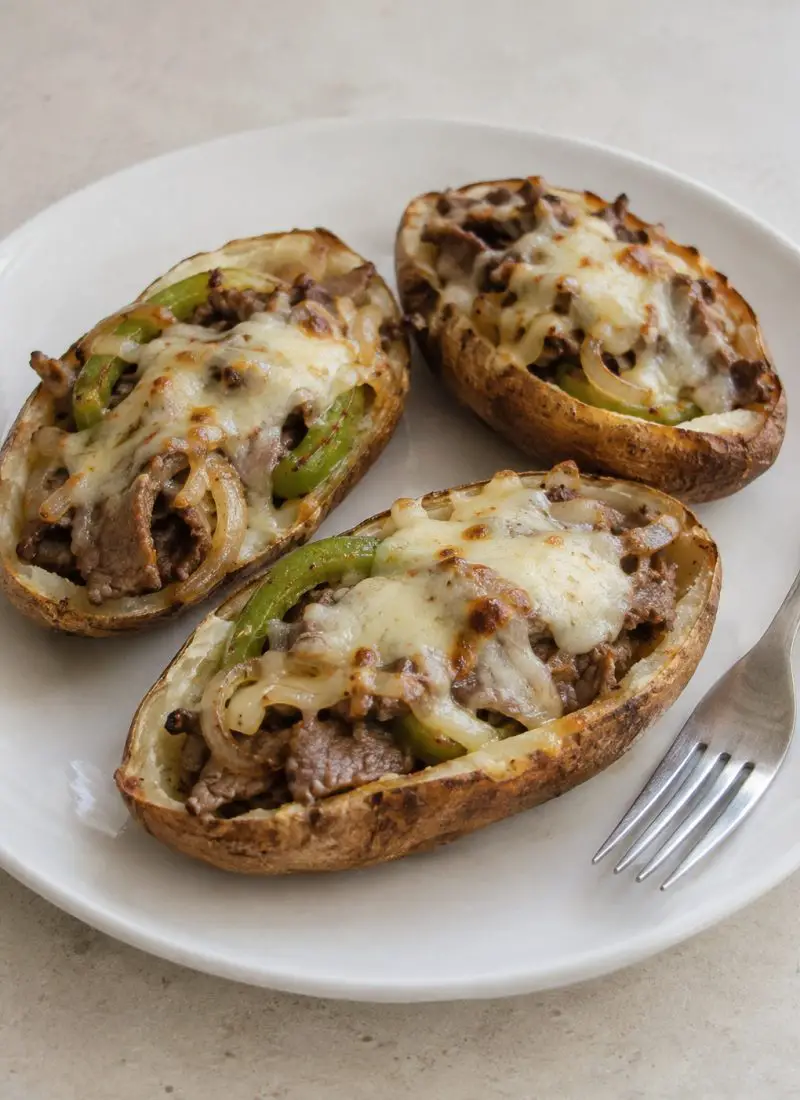
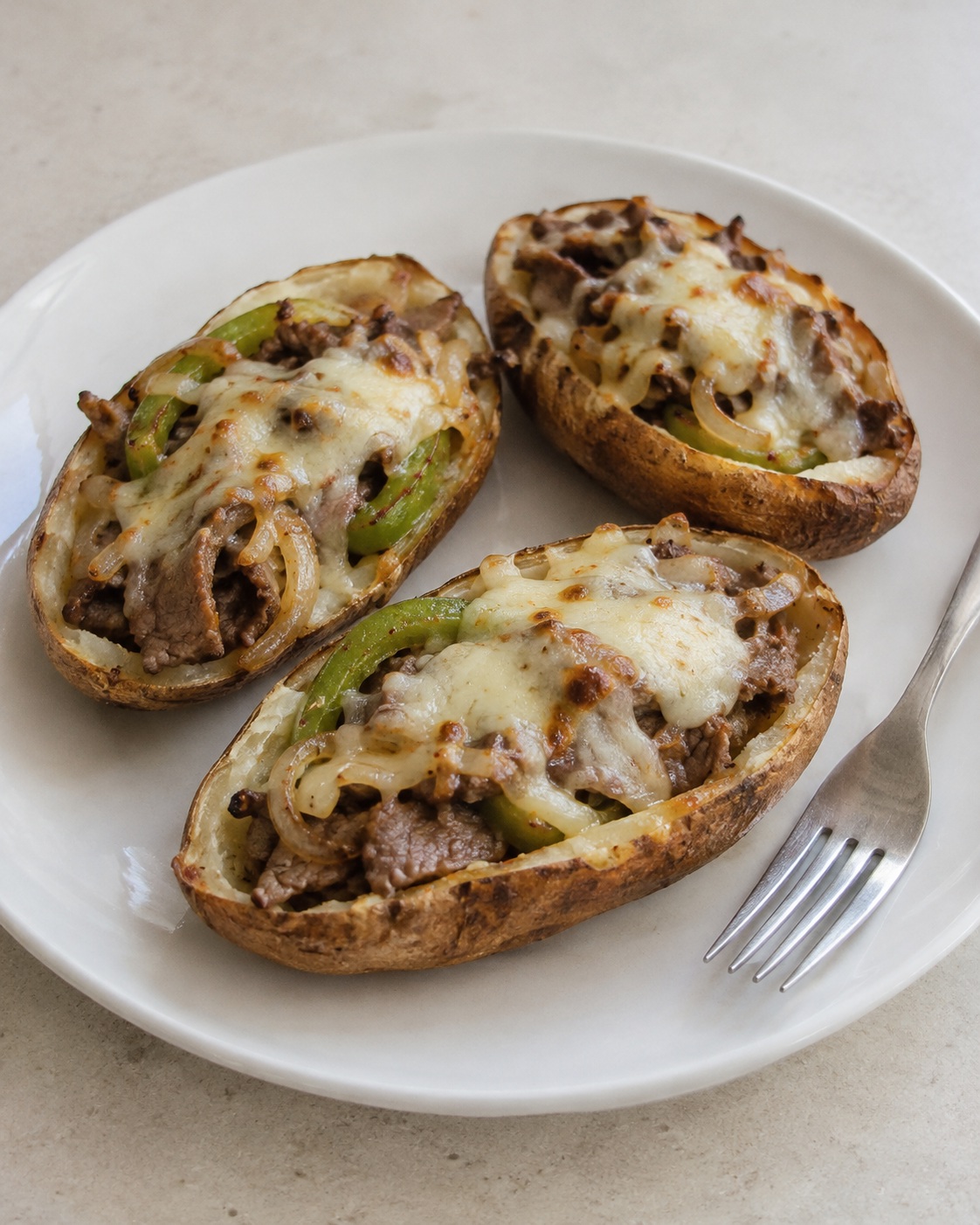
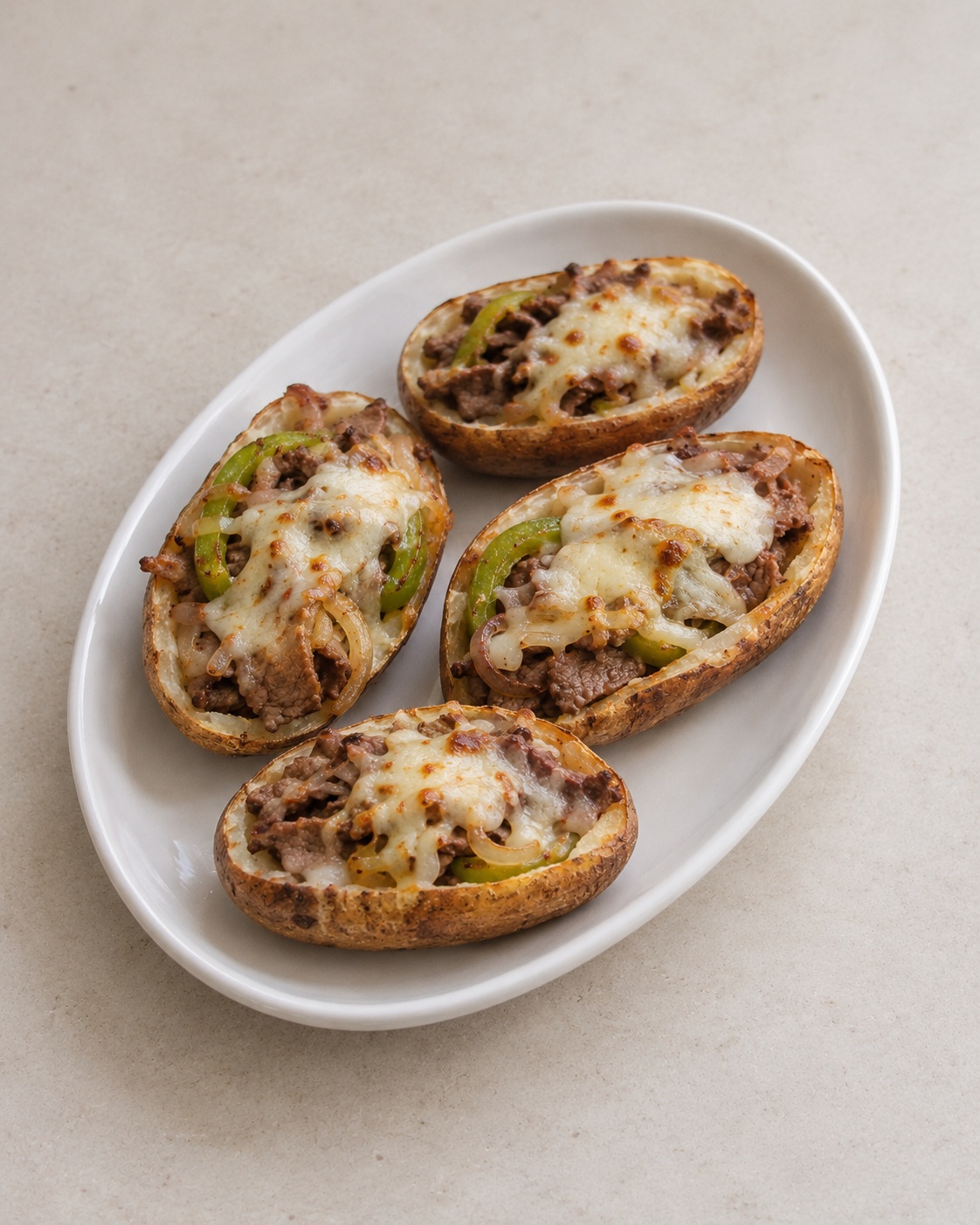
A crisp potato shell makes a handy home for thinly sliced steak, softened green pepper and onion, and a layer of melted provolone. These cheesesteak-inspired potato skins bring the filling of the sandwich to a tray of warm, cheesy appetizers.
The trick is to bake the potatoes until tender, scoop them with a little flesh still attached, then crisp the empty shells before adding the filling. Cook the steak and vegetables while the potatoes bake to keep the work moving.
Before you begin
You will need: a large rimmed baking sheet, a large skillet (about 12 inches), a knife, a spoon, a pastry brush and an instant-read thermometer.
Makes 12 potato-skin halves, or 6 appetizer servings of 2 halves each. Estimated prep: 20 minutes. Cook: 1 hour 25 minutes. Cooling: 10 minutes. Total: about 1 hour 55 minutes. The filling cooks while the potatoes bake. Larger potatoes may need longer; use the doneness cues and temperatures below.
This post contains affiliate links. As an Amazon Associate I earn from qualifying purchases.
A rimmed baking sheet holds the potato halves, and a roomy skillet lets you brown the steak in batches. If you need equipment, Nordic Ware half-sheet pans on Amazon (paid link) are one option, sold as a two-pack. A Lodge 12-inch skillet on Amazon (paid link) is another optional equipment choice. Use a suitable pan and skillet you already own; neither brand nor two baking sheets is required.
Gather your ingredients
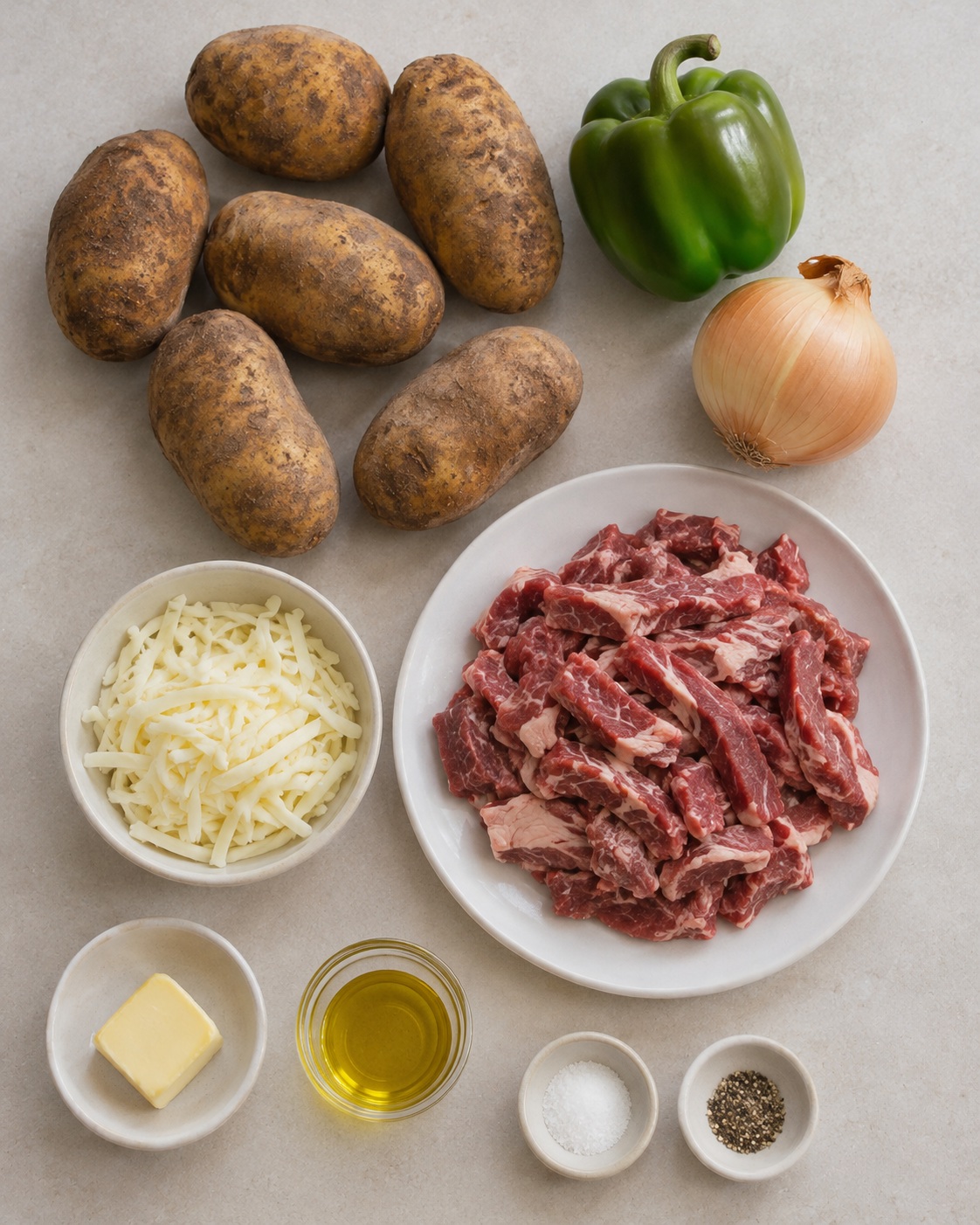
- 6 medium russet potatoes, about 7–8 ounces (200–225 g) each, scrubbed and dried
- 3 tablespoons olive oil, divided: 2 tablespoons for shells, 1 tablespoon for steak
- 1 tablespoon unsalted butter
- 1 medium green bell pepper, seeded and cut into short thin strips
- 1 medium yellow onion, thinly sliced
- 1 pound (450 g) boneless ribeye steak, trimmed of excess hard fat and thinly sliced across the grain into short, bite-size strips; sirloin may substitute
- 3/4 teaspoon fine salt, divided, plus more to taste
- 1/2 teaspoon freshly ground black pepper, divided
- 6 ounces (170 g) provolone, shredded, about 1 1/2 cups; low-moisture mozzarella may substitute
- Optional: 1 tablespoon chopped parsley or chives; hot sauce for serving
Let’s make it
- Heat oven to 400°F (200°C). Pierce dried potatoes several times with a fork. Put on the baking sheet, unwrapped, and bake 50–65 minutes, until a knife slips easily into the centers; larger potatoes may take longer.
- While potatoes bake, melt butter in the skillet over medium heat. Add pepper and onion; cook 8–10 minutes, stirring occasionally, until tender and lightly golden. Transfer to a clean bowl.
- Increase skillet heat to medium-high. Add half the remaining 1 tablespoon oil and half the steak in a single layer. Cook, turning and separating the strips, approximately 2–4 minutes, until browned and cooked through. Transfer to a clean plate and repeat with remaining oil and steak. Time depends on thickness and pan heat. For beef cut from whole steak, verify at least 145°F (63°C) with a suitable thin-tip thermometer, inserted sideways into a sufficiently thick strip; allow at least 3 minutes' rest. Color alone does not establish safety. Combine with vegetables and season with 1/2 teaspoon salt and 1/4 teaspoon pepper. Do not use raw-meat utensils or plates for cooked filling.
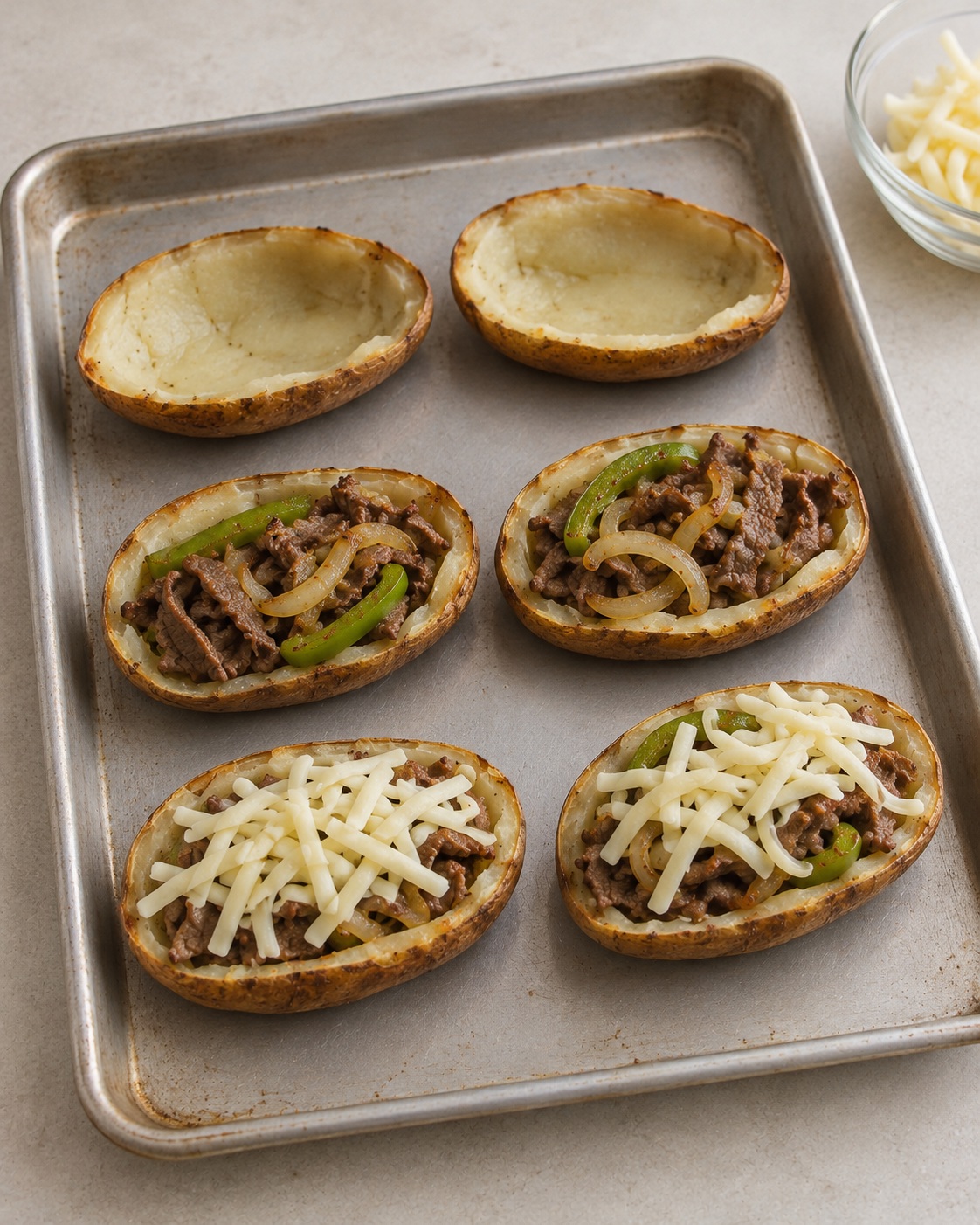
- Let baked potatoes cool approximately 10 minutes, until safe to handle. Keep oven at 400°F. Halve lengthwise and scoop out the centers, leaving approximately 1/4 inch of flesh attached to each skin. Reserve scooped potato for another meal; do not mix it into this filling.
- Brush both sides of the 12 shells with the reserved 2 tablespoons olive oil. Season with the remaining 1/4 teaspoon each salt and pepper. Arrange cut-side down and bake 10 minutes; turn cut-side up and bake another 5–10 minutes, until edges are golden and firm. Give them space rather than stacking.
- Divide the warm steak-vegetable filling evenly among the shells, then top each with approximately 2 tablespoons shredded provolone. Bake cut-side up 8–10 minutes, until filling is hot and cheese is melted. Refrigerated filling/assembled skins require the reheating instructions below, not this short melting time.
- Add optional herbs and serve hot, with hot sauce if desired.
A few crafty little tips
- Keep about 1/4 inch of potato attached to the skin. Paper-thin shells tear easily; too much potato leaves less room for filling.
- Cut the steak across the grain into short strips and cook it in two batches. Crowding the skillet traps steam and makes browning harder.
- Cook the peppers and onions before filling the shells. The final short bake melts the cheese; it is not enough time to soften raw vegetables.
- Divide the filling and cheese evenly among all 12 shells before piling extra onto any one of them.
For beef cut from whole steak, USDA recommends at least 145°F (63°C) and a minimum 3-minute rest. Use a suitable thin-tip thermometer; browning alone does not establish safety. These instructions are for sliced steak, not ground beef. See USDA beef cooking guidance.
Make it your own
Sirloin can replace the ribeye, and low-moisture mozzarella can replace the provolone in the same amount. Add chopped parsley or chives just before serving, or pass hot sauce at the table.
Store it for later
For make-ahead convenience, cook the potatoes and filling up to one day ahead. Cool promptly in shallow containers and refrigerate separately, then scoop and crisp the shells and assemble. Refrigerate cooked components and leftovers within 2 hours, or within 1 hour when the temperature is above 90°F (32°C). Do not leave a large batch on the counter until completely cool. Keep the refrigerator at 40°F (4°C) or below, and use within 3–4 days of the original cooking date, including make-ahead time. See USDA leftover storage guidance.
Reheat refrigerated assembled skins on a baking sheet at 350°F (175°C), loosely covered with foil if the cheese is browning, until the center of the filling reaches 165°F (74°C). Begin checking around 20 minutes and allow longer for larger or densely filled skins. Uncover toward the end if desired. The time is an estimate; the thermometer reading is the endpoint. Frozen leftovers can be thawed in the refrigerator before reheating, although the potato texture may soften. See USDA reheating guidance.
Quick questions
Can I prepare these ahead?
Yes. Cook the potatoes and filling up to one day ahead and refrigerate promptly in separate shallow containers. Crisp the shells before filling. If the filling is refrigerator-cold, follow the 165°F reheating instructions above rather than relying on the short cheese-melting bake.
What should I do with the scooped-out potato?
Save it for mashed potatoes or another potato recipe. It is not added back to these shells. Refrigerate it promptly and use it within the same 3–4-day cooked-leftover window.
Do I need to deep-fry the skins?
No. Brush both sides with oil and bake the empty shells in two stages before filling. Leave room between them so the edges can crisp.
Serve the skins while the cheese is melted and the potato edges are still crisp, with napkins and hot sauce nearby.
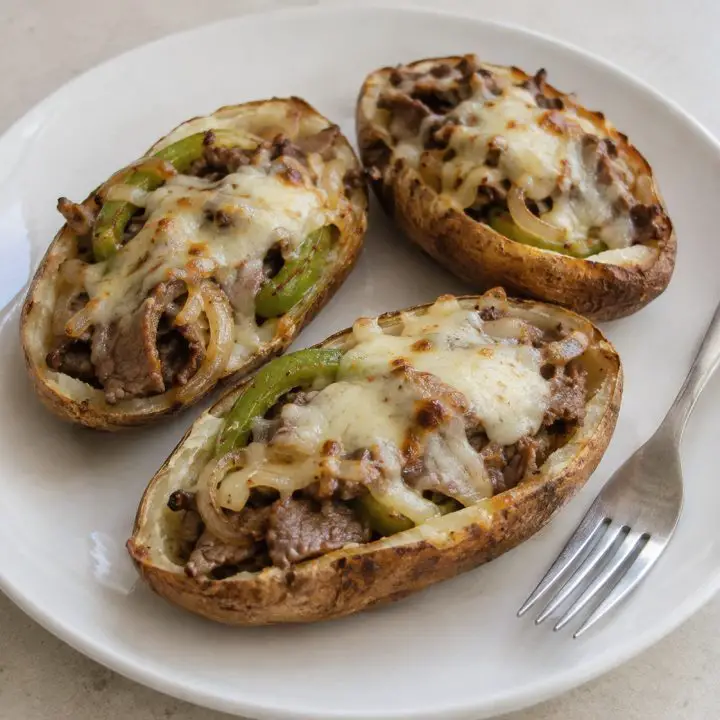
Philly Cheesesteak Potato Skins
Oven-crisped russet potato shells filled with sliced steak, green pepper, onion and melted provolone.
Ingredients
- 6 medium russet potatoes, about 7–8 ounces (200–225 g) each, scrubbed and dried
- 3 tablespoons olive oil, divided: 2 tablespoons for shells, 1 tablespoon for steak
- 1 tablespoon unsalted butter
- 1 medium green bell pepper, seeded and cut into short thin strips
- 1 medium yellow onion, thinly sliced
- 1 pound (450 g) boneless ribeye steak, trimmed of excess hard fat and thinly sliced across the grain into short, bite-size strips; sirloin may substitute
- 3/4 teaspoon fine salt, divided, plus more to taste
- 1/2 teaspoon freshly ground black pepper, divided
- 6 ounces (170 g) provolone, shredded, about 1 1/2 cups; low-moisture mozzarella may substitute
- Optional: 1 tablespoon chopped parsley or chives; hot sauce for serving
Instructions
- Heat oven to 400°F (200°C). Pierce dried potatoes several times with a fork. Put on the baking sheet, unwrapped, and bake 50–65 minutes, until a knife slips easily into the centers; larger potatoes may take longer.
- While potatoes bake, melt butter in the skillet over medium heat. Add pepper and onion; cook 8–10 minutes, stirring occasionally, until tender and lightly golden. Transfer to a clean bowl.
- Increase skillet heat to medium-high. Add half the remaining 1 tablespoon oil and half the steak in a single layer. Cook, turning and separating the strips, approximately 2–4 minutes, until browned and cooked through. Transfer to a clean plate and repeat with remaining oil and steak. Time depends on thickness and pan heat. For beef cut from whole steak, verify at least 145°F (63°C) with a suitable thin-tip thermometer, inserted sideways into a sufficiently thick strip; allow at least 3 minutes' rest. Color alone does not establish safety. Combine with vegetables and season with 1/2 teaspoon salt and 1/4 teaspoon pepper. Do not use raw-meat utensils or plates for cooked filling.
- Let baked potatoes cool approximately 10 minutes, until safe to handle. Keep oven at 400°F. Halve lengthwise and scoop out the centers, leaving approximately 1/4 inch of flesh attached to each skin. Reserve scooped potato for another meal; do not mix it into this filling.
- Brush both sides of the 12 shells with the reserved 2 tablespoons olive oil. Season with the remaining 1/4 teaspoon each salt and pepper. Arrange cut-side down and bake 10 minutes; turn cut-side up and bake another 5–10 minutes, until edges are golden and firm. Give them space rather than stacking.
- Divide the warm steak-vegetable filling evenly among the shells, then top each with approximately 2 tablespoons shredded provolone. Bake cut-side up 8–10 minutes, until filling is hot and cheese is melted. Refrigerated filling/assembled skins require the reheating instructions below, not this short melting time.
- Add optional herbs and serve hot, with hot sauce if desired.
Notes
Makes 12 potato-skin halves, or 6 appetizer servings of 2 halves each. Estimated prep: 20 minutes. Cook: 1 hour 25 minutes. Cooling: 10 minutes. Total: about 1 hour 55 minutes. The filling cooks while the potatoes bake. Larger potatoes may need longer; use the doneness cues and temperatures below.
Keep about 1/4 inch of potato attached to each skin for support. Reserve the scooped-out potato for another meal. Sirloin can replace ribeye, and low-moisture mozzarella can replace provolone in the same amount.
For beef cut from whole steak, USDA recommends at least 145°F (63°C) and a minimum 3-minute rest. Use a suitable thin-tip thermometer; browning alone does not establish safety. These instructions are for sliced steak, not ground beef. See USDA beef cooking guidance.
For make-ahead convenience, cook the potatoes and filling up to one day ahead. Cool promptly in shallow containers and refrigerate separately, then scoop and crisp the shells and assemble. Refrigerate cooked components and leftovers within 2 hours, or within 1 hour when the temperature is above 90°F (32°C). Do not leave a large batch on the counter until completely cool. Keep the refrigerator at 40°F (4°C) or below, and use within 3–4 days of the original cooking date, including make-ahead time. See USDA leftover storage guidance.
Reheat refrigerated assembled skins on a baking sheet at 350°F (175°C), loosely covered with foil if the cheese is browning, until the center of the filling reaches 165°F (74°C). Begin checking around 20 minutes and allow longer for larger or densely filled skins. Uncover toward the end if desired. The time is an estimate; the thermometer reading is the endpoint. Frozen leftovers can be thawed in the refrigerator before reheating, although the potato texture may soften. See USDA reheating guidance.
Check Out Some Of Our Other Recipes / Crafts
- Crispy Fried Cheese Mashed Potato Balls
- Crispy Cheddar Scallion Mashed Potato Bites
- Philly Cheesesteak Pasta
If You Enjoyed This Recipe, Please Share!
If these Philly Cheesesteak Potato Skins brought big smiles to your table, help spread the word. Share the recipe on social media, pin it to your appetizer board, or send it to a friend who loves comfort food. Dishes like this deserve a spot in everyone’s recipe collection.