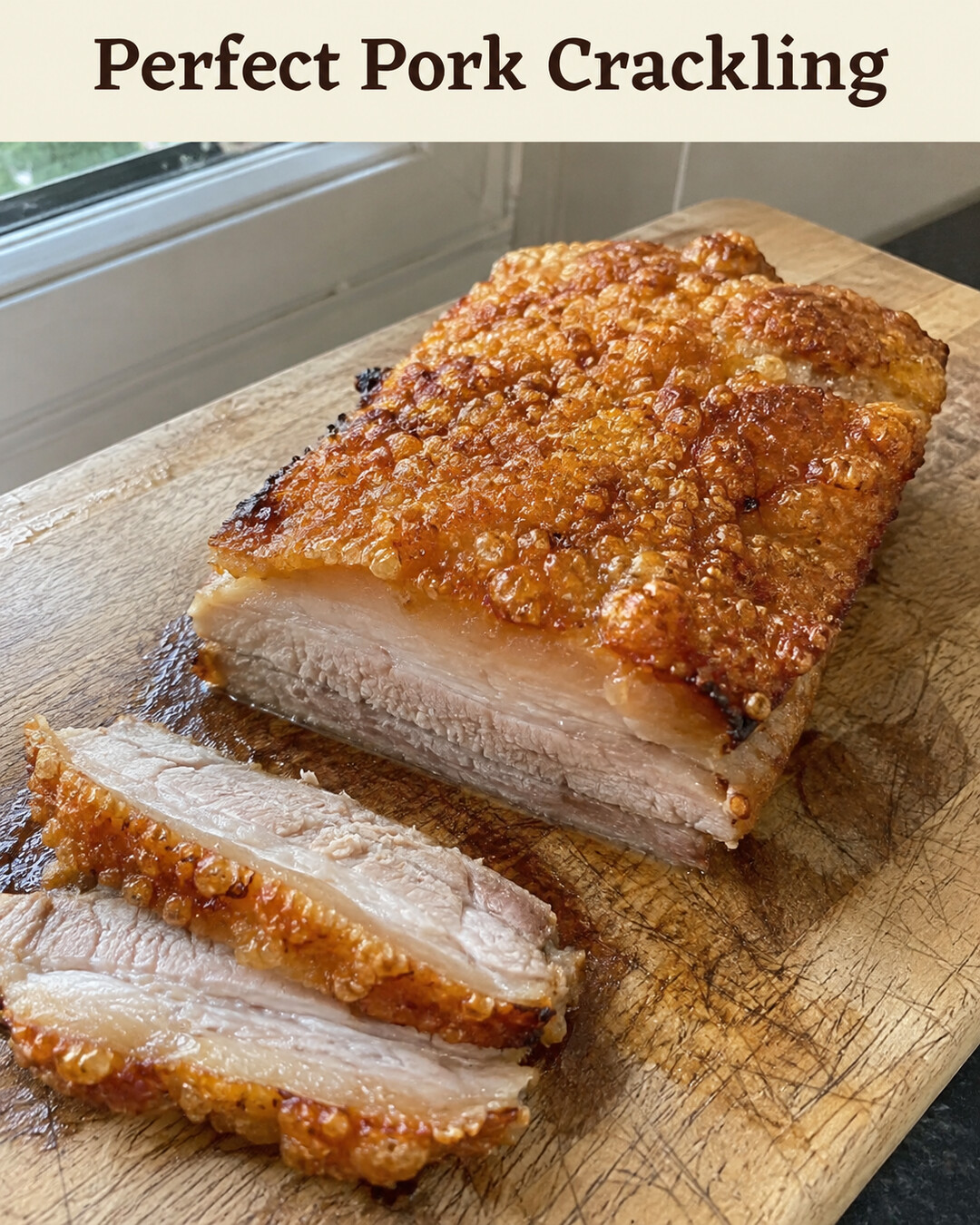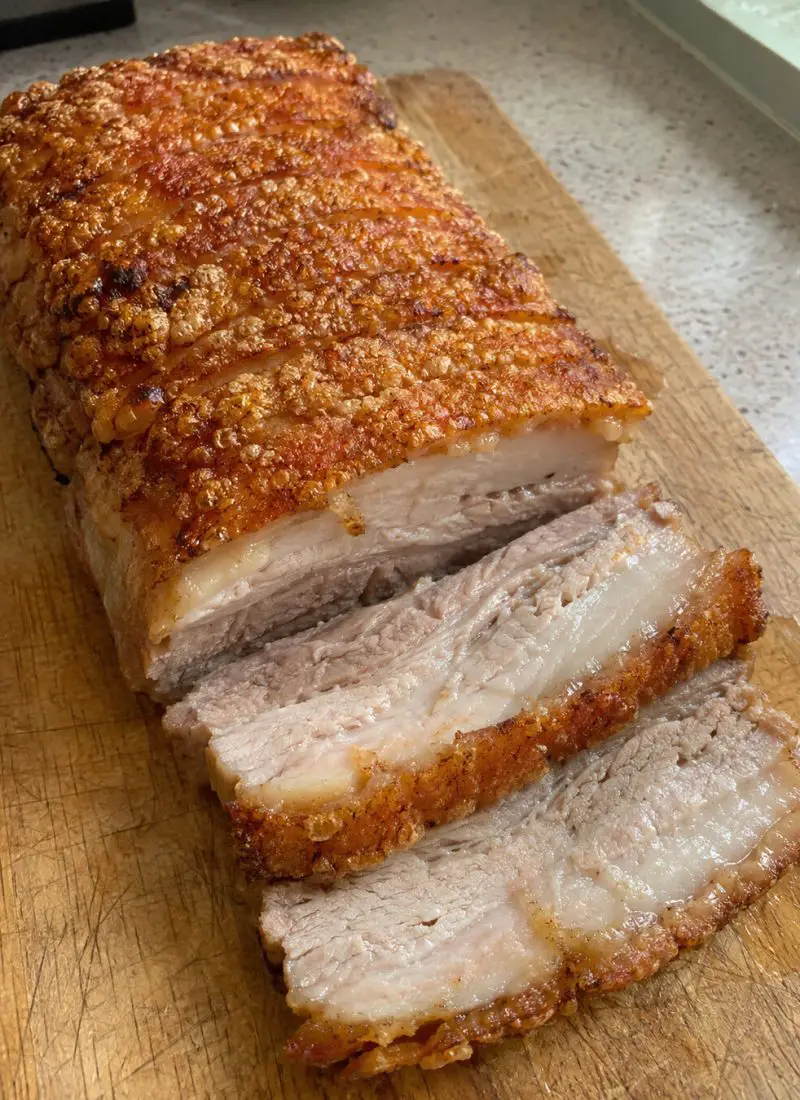
Perfect pork crackling starts with dry skin, a little salt and enough time in the oven. This version uses boneless pork belly, so you get a crisp golden top over rich, tender layers of meat and fat. The ingredients are simple; the overnight drying step does much of the preparation work.
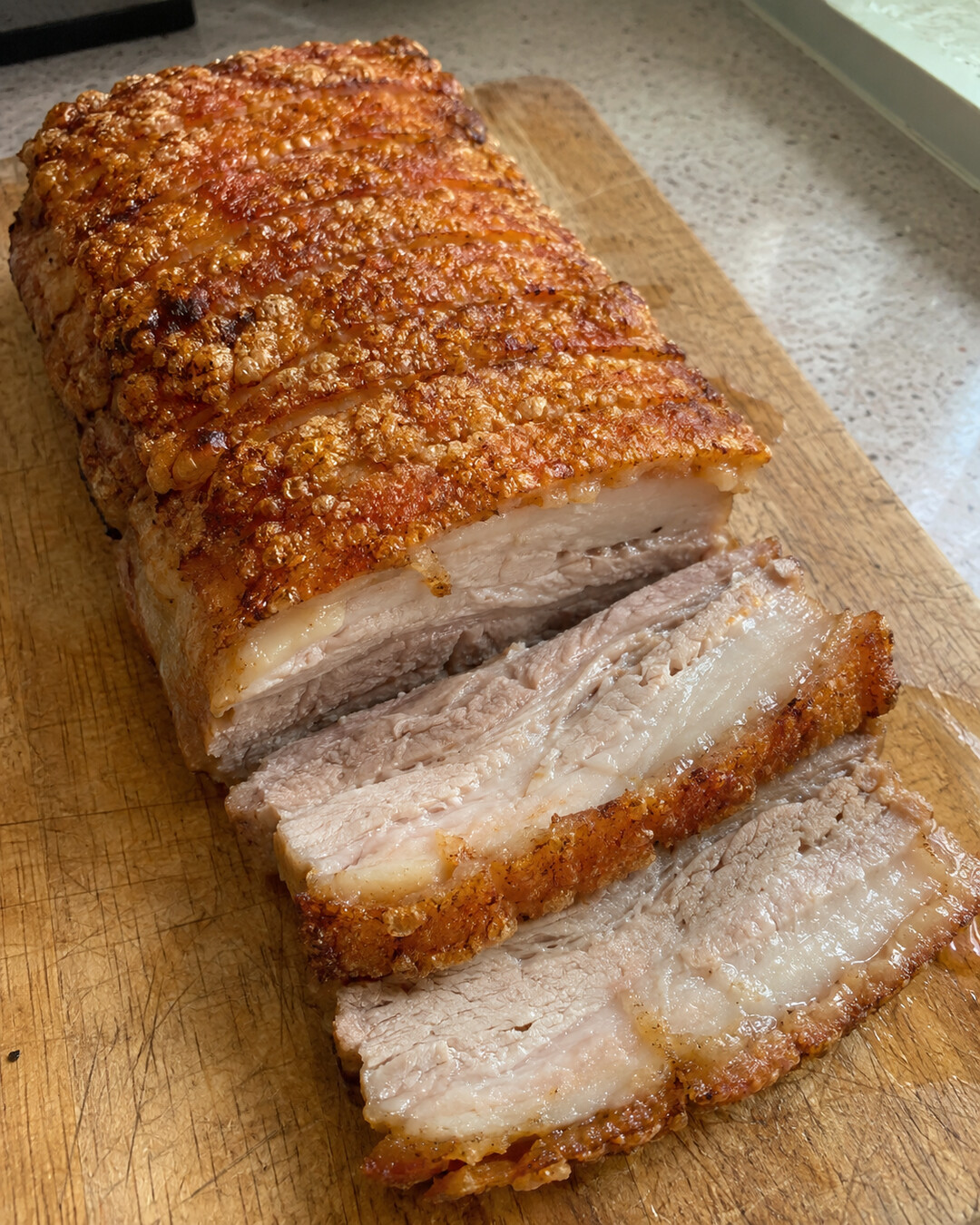
This is a slow Sunday-roast recipe rather than a quick dinner. Allow 15 minutes of hands-on preparation, 12 hours of refrigerated drying, about 3 hours of roasting and 20 minutes of resting. That is approximately 15 hours 35 minutes from start to finish, with most of it hands-off.
What You Need for Perfect Pork Crackling
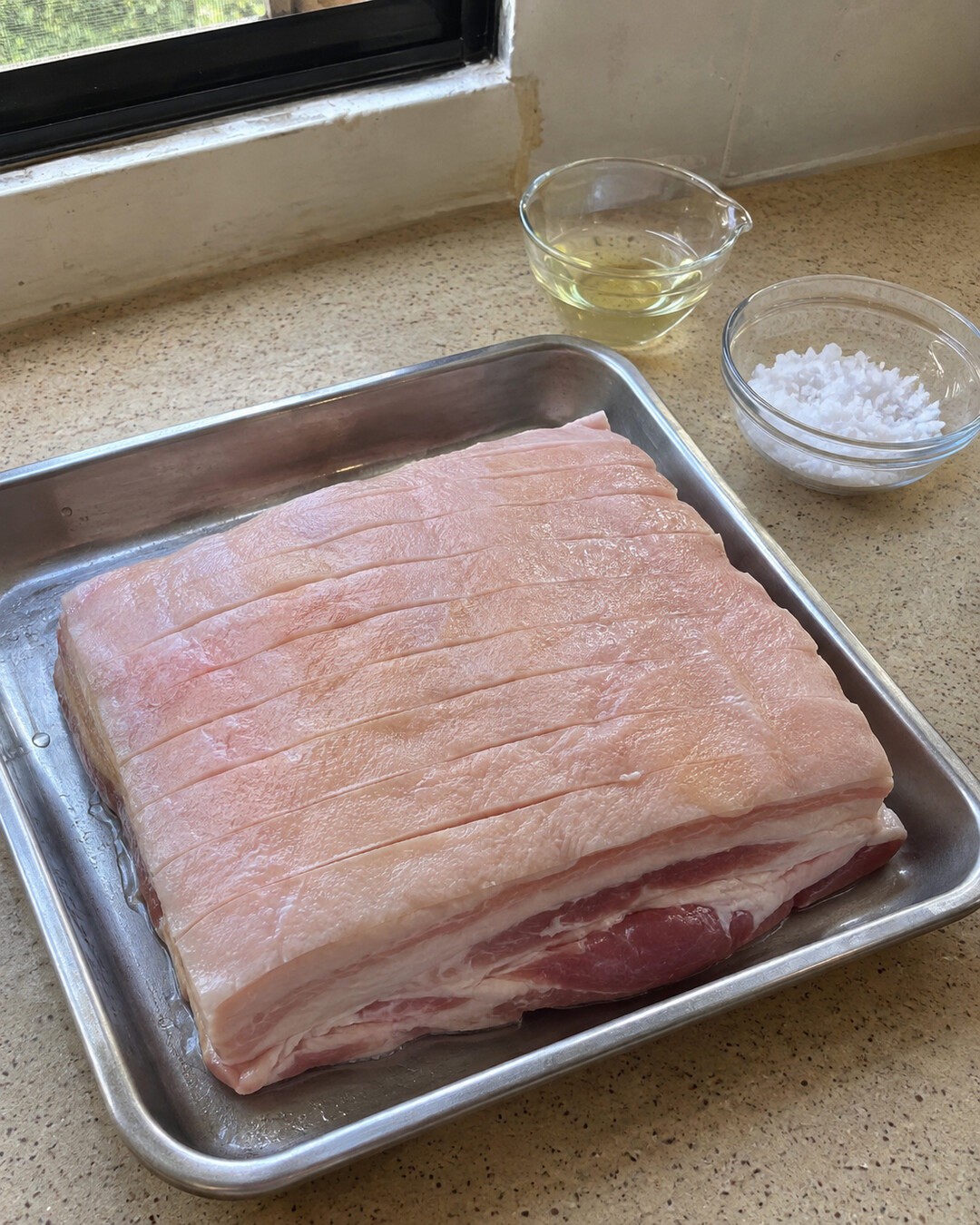
- 1.5 kg (about 3 1/3 lb) boneless skin-on pork belly, fairly even in thickness
- 1 tablespoon neutral cooking oil
- 1 tablespoon flaky sea salt
Equipment: A sturdy roasting pan, an oven-safe rack, paper towels, a food thermometer and a sharp carving knife. The pan needs enough depth to contain the rendered fat. Check that the rack and pan are rated for the highest oven temperature used.
Dry the Skin Before Roasting
Ask the butcher to make shallow parallel scores through the skin and its fat layer without cutting into the meat. This is easier and safer than struggling with a blunt kitchen knife. Pat the surface dry, then place the belly on a rack over a rimmed tray in the refrigerator.
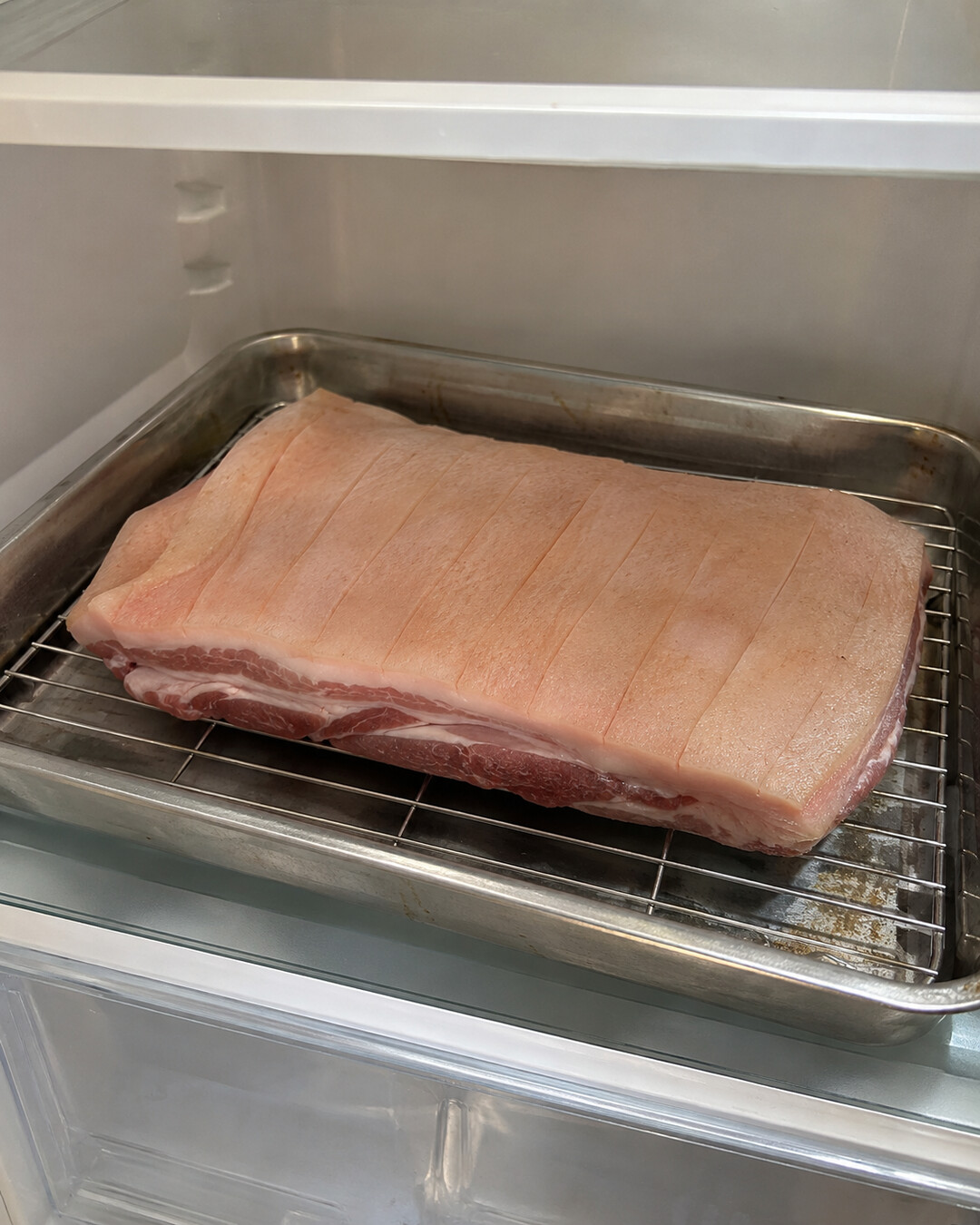
Keep it on a low shelf where drips cannot reach ready-to-eat food. The tray catches any moisture while the cold air dries the surface. Do not wash the raw pork. Clean the preparation area and wash your hands after handling it.
How to Roast Pork Belly with Crackling
- Ask the butcher to score the skin in shallow parallel lines, through the skin and fat but not into the meat. Pat dry. Set skin-side up on a rack over a rimmed tray and refrigerate uncovered for 12 hours on a low shelf away from ready-to-eat food.
- Heat a conventional oven to 400°F (200°C). Pat the skin dry again. Rub the oil over the skin, then distribute the salt across it and into the scores. Place skin-side up on an oven-safe rack in a sturdy roasting pan.
- Roast for 30 minutes. Reduce the oven to 350°F (180°C) and roast for 2 hours more. Keep the skin uncovered and do not baste it.
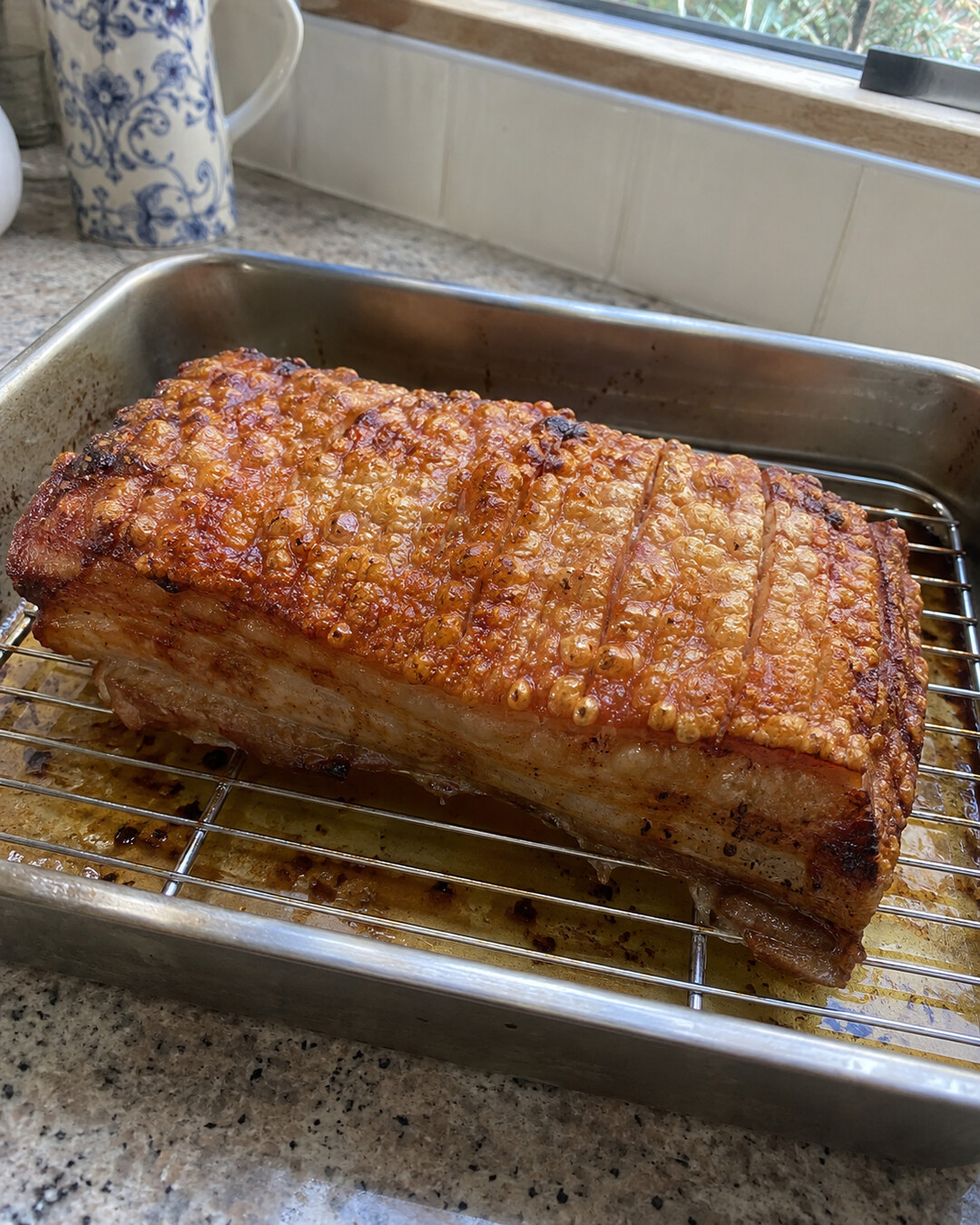
- Increase the oven to 425°F (220°C) and roast for about 20–30 minutes, checking frequently, until the skin is blistered and crisp. If some areas brown early, shield only those areas with small pieces of foil.
- Check the thickest meat with a food thermometer, avoiding fat and the rack. It must reach at least 145°F (63°C), and the meat should also feel tender when pierced. If still firm, continue at 350°F (180°C), shielding browned skin as needed. Cooking time varies with thickness.
- Rest on a board for 20 minutes without covering the crackling. Slice carefully with a sharp knife and serve.
Getting the Texture Right
The skin should feel crisp and sound firm when gently tapped with the back of a spoon. The meat beneath should be tender, not merely warm in the center. A thermometer checks safety, but it does not tell you whether the connective tissue has softened enough.
Do not use this timing for pork shoulder or loin. Those cuts have different shapes and fat levels. Even two pieces of belly can cook differently if one is much thicker, so use the timing as a guide and check the actual roast.
If one corner browns faster than the rest, cover just that spot with foil. Keep a close watch during the final hot stage. Avoid pouring juices over the skin or tightly wrapping the finished roast, as moisture softens the crackling.
Serving and Storing Pork Crackling
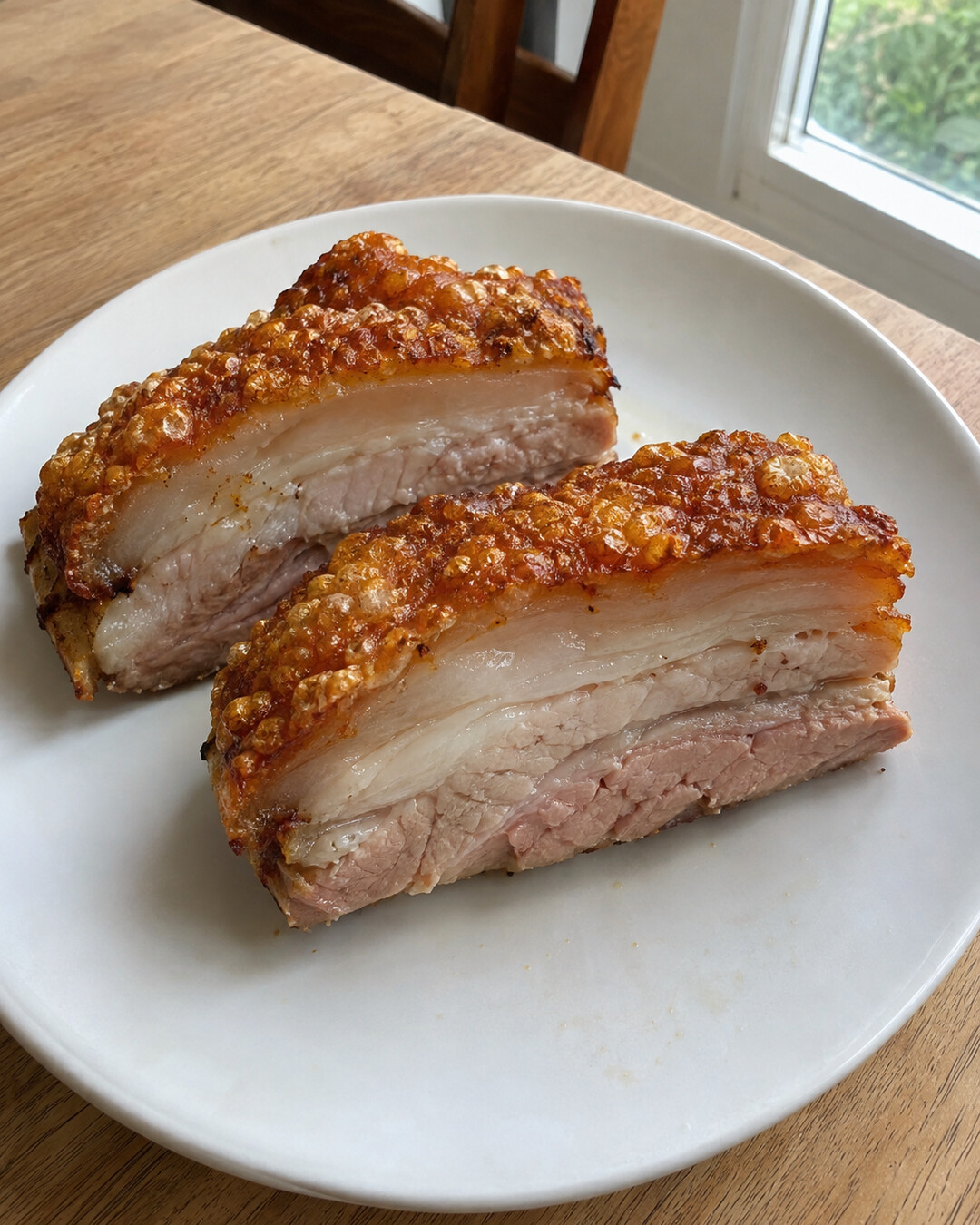
Rest the roast uncovered before carving. Cut into manageable thick slices, and serve gravy or other sauces alongside rather than over the crisp top. Simple potatoes and vegetables balance the richness of the belly.
Refrigerate leftovers within 2 hours in shallow covered containers and use within 3–4 days. Reheat to 165°F (74°C). The crackling will lose some crunch in the refrigerator; an oven can help dry the surface again, but the result may not be as crisp as it was freshly roasted.
For the temperature guidance, see USDA advice for pork roasts. The roasting approach also draws on Good Food’s three-hour pork belly method, simplified here to salt and oil.
Printable Recipe
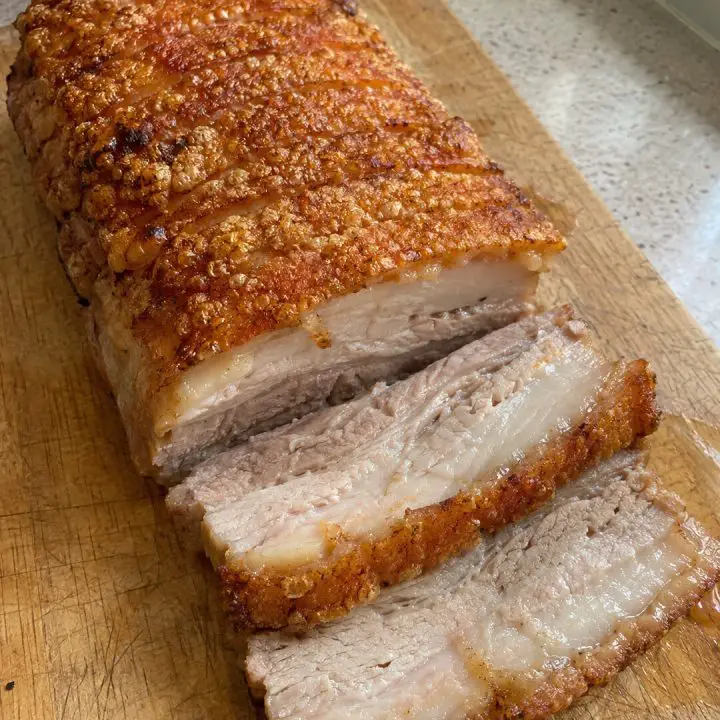
Perfect Pork Crackling
Skin-on pork belly roasted until tender with a crisp golden crackling top. Drying the skin in the refrigerator is an important make-ahead step.
Ingredients
- 1.5 kg (about 3 1/3 lb) boneless skin-on pork belly, fairly even in thickness
- 1 tablespoon neutral cooking oil
- 1 tablespoon flaky sea salt
Instructions
- Ask the butcher to score the skin in shallow parallel lines, through the skin and fat but not into the meat. Pat dry. Set skin-side up on a rack over a rimmed tray and refrigerate uncovered for 12 hours on a low shelf away from ready-to-eat food.
- Heat a conventional oven to 400°F (200°C). Pat the skin dry again. Rub the oil over the skin, then distribute the salt across it and into the scores. Place skin-side up on an oven-safe rack in a sturdy roasting pan.
- Roast for 30 minutes. Reduce the oven to 350°F (180°C) and roast for 2 hours more. Keep the skin uncovered and do not baste it.
- Increase the oven to 425°F (220°C) and roast for about 20–30 minutes, checking frequently, until the skin is blistered and crisp. If some areas brown early, shield only those areas with small pieces of foil.
- Check the thickest meat with a food thermometer, avoiding fat and the rack. It must reach at least 145°F (63°C), and the meat should also feel tender when pierced. If still firm, continue at 350°F (180°C), shielding browned skin as needed. Cooking time varies with thickness.
- Rest on a board for 20 minutes without covering the crackling. Slice carefully with a sharp knife and serve.
Notes
This schedule is for boneless pork belly, not pork shoulder or loin. Plan for 12 hours of refrigerated drying plus about 3 hours cooking and 20 minutes resting. Additional time includes drying and resting. USDA minimum for pork roasts is 145°F (63°C) followed by at least 3 minutes rest; tenderness may require a higher final temperature. Refrigerate leftovers within 2 hours in shallow covered containers, use within 3–4 days and reheat to 165°F (74°C).
Check out some of our other recipes / crafts.
If You Enjoyed This Recipe, Please Share!
Save this pork crackling guide for your next roast dinner, or share it with a friend who loves a crisp golden crust. If you make it, leave a comment and tell us how your roast turned out.